Series Drops and Price Pops: How to Read the Anime Industry Calendar Like a Crypto Trader
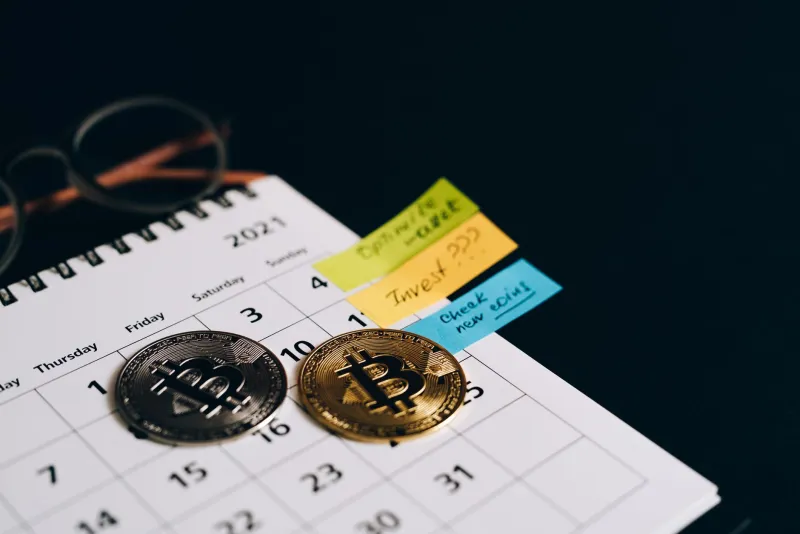
Anime fans have always lived season to season. New cour drops, hype builds, the internet loses its mind for about three weeks, and then everyone moves on to the next thing. It's a cycle as reliable as the changing seasons — and if you're paying attention to crypto markets alongside your simulcast queue, you've probably noticed something interesting: the anime news calendar and token volatility charts rhyme in ways that feel almost too clean to be coincidental.
They're not coincidental. They're a pattern. And once you can read it, you've got a repeatable edge that most traders aren't even looking for.
Why Anime Announcements Move Markets at All
Before mapping the pattern, it helps to understand why anime industry news affects crypto prices in the first place. The answer is community density. Anime fandoms are among the most organized, most online, and most financially active communities in entertainment. When a beloved IP gets a sequel announcement, or a beloved studio lands a major licensing deal, those fans are already in Discord servers, already holding related tokens, and already primed to react.
Add to that the NFT collector overlap — a massive portion of serious anime NFT holders are also active crypto traders — and you've got a market segment that genuinely moves liquidity based on cultural news. A major announcement doesn't just generate excitement. It generates buying pressure, and that pressure tends to show up in price charts before most people have even finished reading the press release.
The Four-Phase Announcement Cycle
Here's where it gets practical. Based on how anime industry news typically unfolds, there's a rough four-phase structure that repeats across most major announcements:
Phase 1: The Leak Window Almost nothing in anime stays secret. Production committee paperwork, trademark filings, voice actor social media activity — the community sleuths are always working. In the 48 to 72 hours before a formal announcement, informed speculation tends to spike on platforms like Twitter/X and Reddit. Token trading volume often ticks up during this window, even before any official word drops. This is where early movers operate.
Phase 2: The Announcement Spike The official reveal hits — whether it's a new series, a sequel greenlight, a major streaming licensing deal, or a studio partnership announcement. Price action can be dramatic here, especially for tokens tied directly to the IP or the studio involved. This is the most visible phase and, honestly, the worst time to enter if you haven't already positioned. Buying the announcement is almost always buying someone else's profit.
Phase 3: The Hype Plateau After the initial spike, prices tend to stabilize at an elevated level as mainstream coverage catches up and casual fans pile in. This phase can last anywhere from a few days to a few weeks depending on how significant the news is. It feels like a great time to buy because the hype is loudest — but the smart money is already eyeing the exit.
Phase 4: The Reality Correction When actual episodes start airing (or worse, when they don't live up to expectations), prices frequently correct. The gap between announcement excitement and delivered content is where a lot of retail holders get caught. Studios miss production timelines. Streaming deals fall through. A highly anticipated sequel turns out to be a cash-grab recap film. Each of these outcomes has a corresponding chart shape, and they all tend to look like a cliff with a slow crawl back up.
Licensing Deals: The Underrated Catalyst
Most traders focus on sequel announcements and new series greenlight news, but licensing deals are arguably the more tradeable event. Here's why: they're more frequent, they're often more quantifiable, and they carry clearer financial implications.
When a major streaming platform — say, a US-based giant like Crunchyroll or Netflix — secures exclusive rights to a high-profile series, the downstream effects are significant. Merchandise licensing follows. Collab NFT drops get announced. Token projects tied to the IP suddenly have a much larger addressable audience. The US market, in particular, tends to amplify these announcements because American streaming deals signal mainstream crossover potential, which brings in buyers who wouldn't otherwise touch an anime-adjacent token.
The playbook here is to monitor trademark filings and streaming platform content calendars (which often hint at upcoming exclusives before official announcements) and position early in related token ecosystems before the deal goes public.
Studio Mergers and Acquisitions: Volatility in Both Directions
Studio-level corporate news is a different animal. Mergers, acquisitions, and bankruptcy proceedings create volatility that doesn't follow the clean upward arc of a hype cycle — it cuts both ways, fast.
When a struggling studio gets acquired by a larger parent company or a streaming platform, tokens associated with that studio's IP can spike hard on the speculation that the acquiring entity will monetize that IP more aggressively (including via NFTs and blockchain integrations). But when a studio folds outright — or when a merger falls apart — the opposite happens, and it happens quickly.
The key data point to track here is production committee composition. Anime productions are typically funded by committees of investors, and when those committees start dissolving or restructuring, it's an early warning sign that shows up in industry trade publications well before it registers in crypto markets.
Cancellations: The Asymmetric Trade
Here's the contrarian angle most people miss: anime cancellations, while obviously bad news for fans, can create interesting asymmetric trading setups. When a series gets cancelled mid-run, associated token prices usually crater — sometimes dramatically. But if the IP has genuine long-term value (a beloved source manga, a strong international fanbase, an established merchandise ecosystem), those prices often recover as the community rallies around the property and demands continuation.
Some of the best entry points in anime-adjacent crypto markets have come in the immediate aftermath of cancellation announcements, when panic selling overshoots fair value. The risk is real — some IPs genuinely don't recover — but for traders willing to do the IP-level research, it's a window worth watching.
Building Your Own Tracking Framework
Pulling this all together into something actionable means setting up a monitoring system that catches signals early. A few components worth building out:
- Trademark filing alerts: The US Patent and Trademark Office database, along with Japanese equivalents, often surfaces new IP registrations weeks before announcements.
- Production committee tracking: Industry publications like Anime News Network and Crunchyroll News regularly cover financing and committee news that mainstream crypto media ignores entirely.
- Community sentiment monitoring: Discord servers and subreddits for specific IPs often show volume spikes in conversation before prices move. Tools that track mention frequency across platforms can help automate this.
- Token correlation mapping: Not every anime token moves on every anime announcement. Building a map of which tokens are actually tied to which IPs (versus just using anime branding for marketing) is foundational work that saves a lot of confusion later.
The Bottom Line
The anime industry runs on a predictable content calendar, and that calendar creates predictable windows of opportunity in crypto markets — if you know where to look and when to act. The traders winning in this space aren't necessarily the biggest anime fans or the most sophisticated quants. They're the ones who've taken the time to map the pattern, build the monitoring infrastructure, and develop the discipline to position before the announcement rather than after the hype.
The next major series announcement is already in the pipeline somewhere. The question is whether you'll be positioned when it drops — or whether you'll be reading about it after the chart already moved.